

About us
Ghana Fund does not raise money for its projects through taxation, instead, tries to create the opportunity for reducing the tax burden on citizens through giving support to government policies on poverty eradication, infrastructural development and industrialisation. The success of Ghana Fund in raising the needed money to support its budget will contribute substantially to government’s ability and willingness to maintain, reduce or scrap certain taxes as government may deem fit for the good of the public.
Ghana Fund emphasises practical solutions to national economic development and creates automatic citizens participation to complement government efforts in making the lives of citizens better. Thus, its projects are designed in a top-down approach to ensure the long-term macro- and micro-economic sustainability.
The development of the Fund is contingent on establishing a seed capital with adequate capacity for driving an impeccable financial capacity. Using a broad-based and open financial resources and vehicles, Ghana Fund will leverage its ambassadors across as many countries as may be possible to promote the ideals of the Fund for international investments and businesses.
Our Projects
Gold Depository
With strong governance, independent audits, and international-standard vault infrastructure, the Depository will operate with full transparency and accountability.
Overall, the Gold Depository is an investment in national sovereignty. It strengthens our reserves, boosts investor confidence, stabilises the financial system, and ensures long-term economic resilience for all citizens.
Ghana Fund gold depository will bridge the gap between physical gold ownership and financial market integration, providing secure storage, liquidity, and investment opportunities. It is vital for Ghana’s economy and for countries where gold is both a traditional store of value and a modern financial asset. Building adequate sovereign wealth hinged on gold and other precious metals will lower cost of living and protect the personal wealth of citizens.
Food Depository
The Food Depository will store essential grains and staples so that during hard times - whether caused by drought, floods, global shortages, or rising prices - there will always be enough food for every household. No family should ever go hungry because of events they cannot control.
This initiative also supports our hardworking farmers. By purchasing surplus harvests, the Depository guarantees a fair market, reduces waste, and encourages increased food production across the country.
In times of emergencies or disasters, the Food Depository will provide immediate relief - food that is safe, stocked, and ready to distribute to affected communities.
And by reducing our dependence on expensive food imports, we strengthen our economy, protect our foreign exchange, and build a more resilient agricultural sector.
A National Food Depository is an investment in our future - food security for all, stability for every home, and strength for our nation.
Ghana Transit Trade Centre
Africa Overseas Commercial Exchange
AOCE works by connecting qualified producers with foreign markets, providing market intelligence, and supporting compliance with international standards. This encourages value addition, strengthens local supply chains, and promotes industrial growth.
The benefits are significant: businesses can increase sales and expand globally; local industries are strengthened; jobs are created; and the economy gains from diversified exports rather than raw commodity dependence. AOCE also incentivizes small and medium enterprises to scale, fostering inclusive economic growth.
In essence, AOCE is more than a trade platform - it’s a bridge between local production and global opportunity, driving sustainable economic development across Africa.
Co-Operative Comprehensive Hospital
The Co-Operative Comprehensive Hospital is a new model of healthcare designed to put the community first. Owned and managed by cooperative members - including citizens, workers, and local stakeholders - the hospital ensures that healthcare decisions reflect the real needs of the people.
It will provide full-spectrum medical services, from emergency care and general consultations to specialist treatment, surgeries, maternal and child health, and preventive care programmes. By operating as a cooperative, the hospital can keep costs low, reinvest any surplus into improving facilities, equipment, and staff training, and make healthcare affordable and accessible for everyone.
Beyond treatment, the hospital will promote community health through education, wellness programmes, and early disease detection. It will also create jobs for healthcare professionals and support staff, boosting the local economy. Citizens will have a say in how the hospital is run, fostering a sense of ownership and accountability.
In short, the Co-Operative Comprehensive Hospital is not just a place to get care - it’s a community-driven hub for health, empowerment, and economic growth, making quality healthcare closer and fairer for all.
Aviation
Aerospace
It will drive innovation, research, and technology development, inspiring the next generation in science and engineering. Modern aerospace infrastructure will improve air transport, logistics, and even agriculture through drones and satellites.
Beyond business, it strengthens national security, disaster response, and communications, while positioning Ghana as a leader in African technology and space capabilities.
With the Ghana Fund, the sky is not the limit - it’s just the beginning for Ghana!
Agriculture and Canal Development
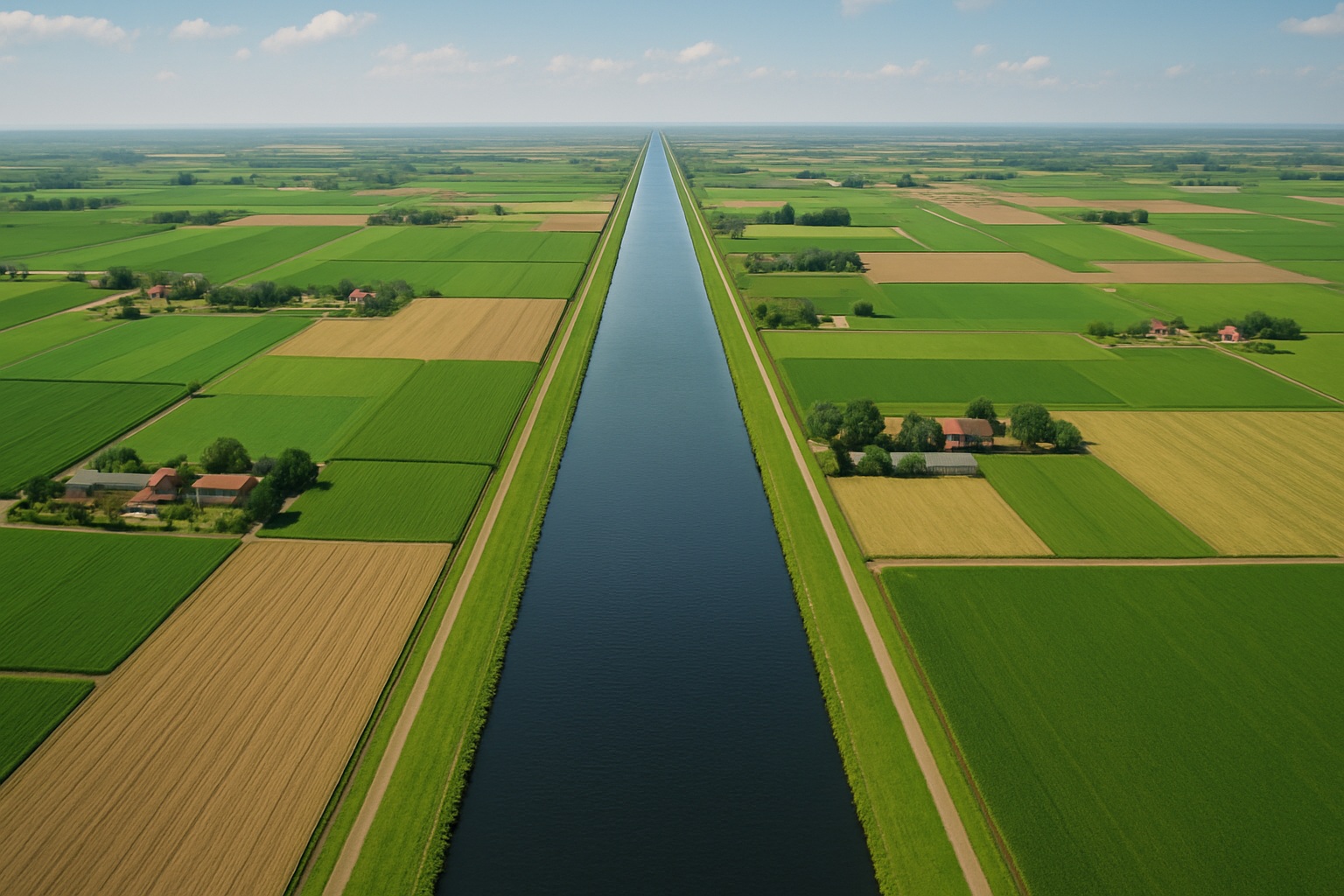
The scheme promises modern agricultural infrastructure: greenhouses, barns, insect nets, and water management systems to increase crop yields and reduce losses. By combining irrigation, modern equipment, and cooperative farming, the scheme aims to move Ghanaian agriculture from largely rain-fed, small-scale farming to a commercial, industrialized system. It will also deploy digital agriculture and precision farming such as sensors and IoT, Drones, Satellite, Big Data, connectivity, blockchain, Artificial Intelligence and Machine learning, software applications/platforms and GPS Technology.
If implemented successfully, this could bring major benefits: higher crop productivity, more stable food supply, job creation in farming, processing, and logistics, better incomes for rural communities, and increased export potential. It could also improve climate resilience, protecting crops from droughts and rainfall variability.
With a proper cooperation from the public and farmers, the scheme has the potential to boost Ghana’s economy, reduce poverty, and strengthen food security.
Railway Rolling Stock Production
For Ghana, this means thousands of jobs, industrial growth, reduced dependence on imported trains, and a modernized railway network that improves passenger and cargo transport. It will also stimulate related industries like steel, electronics, and logistics, while fostering innovation and technical expertise.
For Africa, the facility could supply high-quality rolling stock to neighbouring countries, strengthening regional trade and connectivity, reducing import costs, and supporting sustainable infrastructure development. By building local capacity, Ghana could become a regional leader in railway manufacturing, driving economic growth, job creation, and long-term industrial development across the continent.
Railway Infrastructure Development
Economically, the railway will boost trade, reduce transport costs for goods and commuters, create jobs during construction and operation, and stimulate urban development around stations. Residents in suburbs and peri-urban areas will gain better access to workplaces, schools, markets, and hospitals, promoting social inclusion and opportunity for all.
The project is designed in phases, delivering early benefits while the full network is completed, ensuring quicker impact for citizens. By connecting communities, supporting sustainable urban growth, and providing a modern, affordable, and environmentally friendly transport solution, Ghana Fund’s Urban Railway is set to reshape Accra into a more efficient, liveable, and economically vibrant city.
Railways Services
To ensure safe, efficient, and reliable service, Ghana Fund will focus on data-driven scheduling, preventive and predictive maintenance, and modern signalling systems. Passenger experience will be prioritized with real-time updates, accessible stations, and convenient ticketing. Staff training, strict safety protocols, and security measures will be essential, alongside sustainable operations using energy-efficient trains. Integrating with buses, trotros, and last-mile solutions, while monitoring performance through analytics, will ensure the Greater Accra Urban Railway network meets commuter needs, supports urban growth, and boosts economic development.
Public Transport Improvement
Ghana Fund is creating a modern, integrated transport system in Ghana, combining the Greater Accra Urban Railway, Air-Viator, and road transport to move people and goods efficiently. The railway provides a high-capacity backbone, reducing congestion and travel time across Accra. Feeder buses and shuttles link communities, markets, and workplaces, ensuring last-mile connectivity. Air-Viator connects cities and regions, enabling fast transport of passengers, high-value cargo, and perishable goods. Together, these three modes form a seamless network with digital ticketing and coordinated logistics, boosting productivity, reducing fuel costs, capturing revenue domestically, and transforming mobility into a driver of economic growth, trade, and national development.
Ship-Building
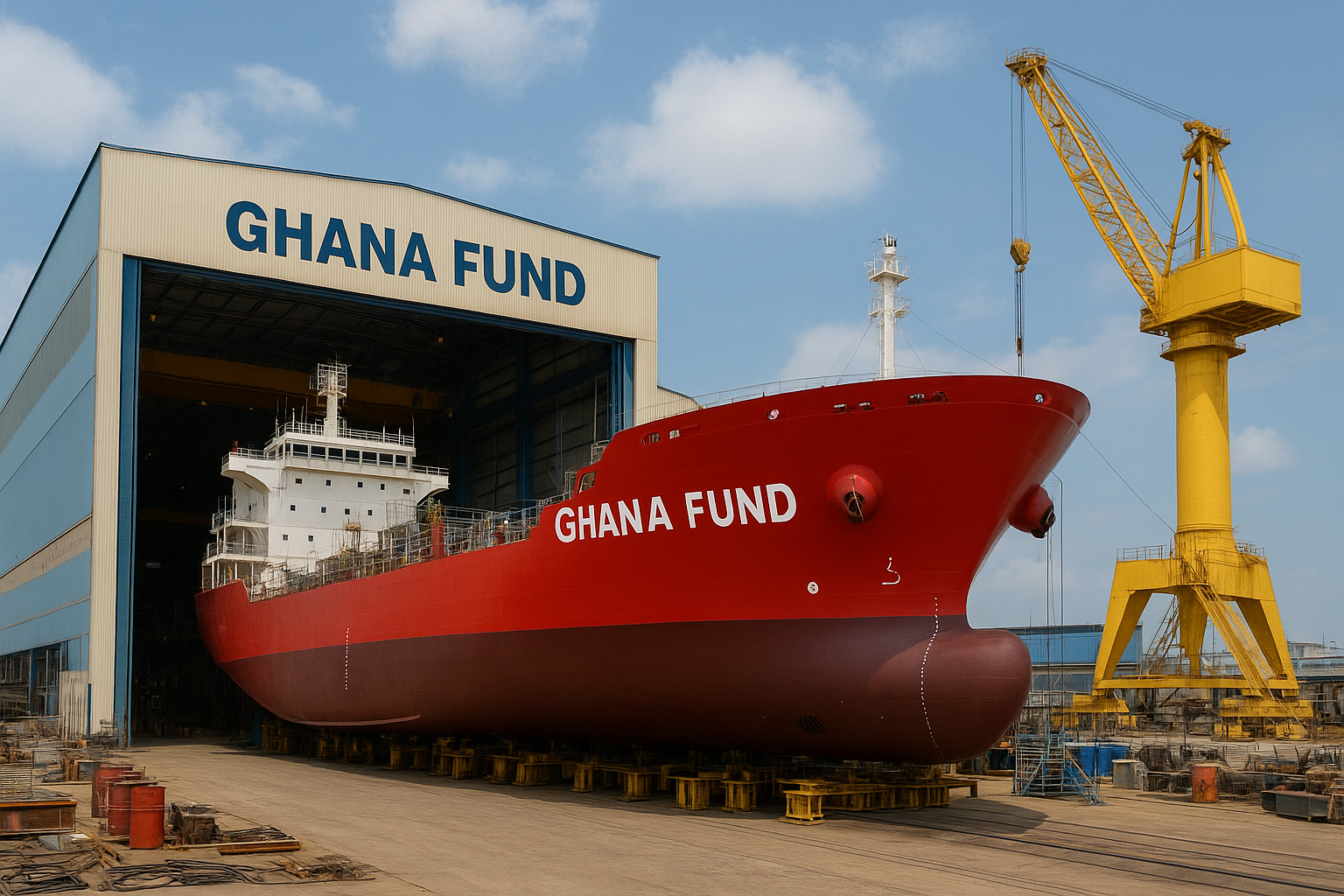
Ghana Fund envisions transforming Ghana into a leading ship-building and maritime industrial hub in Africa. The plan focuses on building a modern shipyard capable of producing a wide range of vessels — from fishing boats and ferries to support vessels, coastal cargo ships, patrol boats, and eventually container vessels. By developing this sector, Ghana will reduce dependence on foreign-built ships, retain foreign exchange, and create thousands of skilled jobs in engineering, fabrication, welding, marine technology, and logistics.
The ship-building initiative also aims to revive Ghana’s maritime infrastructure, modernize drydocks, strengthen port activity in Tema and Takoradi, and attract repair and maintenance contracts from across the region. Over time, Ghana could export vessels to other African countries, positioning itself as a competitive supplier in a largely underserved regional market.
If executed with strong investment, training, and partnerships, Ghana Fund’s ship-building programme can spark large-scale industrialisation, expand local value chains, boost exports, and establish Ghana as a true maritime power-house within 10–15 years.
Marine Transport Services
Ghana Fund’s Marine Transport Services aims to create a modern, reliable, and efficient water-based transport network that connects coastal cities, lakeside communities, industrial hubs, and major ports across Ghana and Africa. The vision is to build a safe, affordable, and high-capacity marine system that eases pressure on road networks, strengthens national logistics, and unlocks new economic opportunities along Ghana’s coastline and inland waterways.
At the core of the vision is a fleet of Ghana-built ferries, passenger boats, rapid catamarans, cargo barges, and specialized vessels that move people, goods, and raw materials seamlessly between ports such as Tema, Takoradi, Elmina, Ada, Keta, and inland routes like the Volta Lake corridor. By integrating marine transport with rail and road networks, Ghana Fund will create a unified national mobility system that shortens travel times, reduces logistics costs, and boosts trade efficiency.
Marine Transport Services will also support tourism, fisheries, energy, and industrial growth by providing dependable maritime access, modern docks, safe navigation systems, and world-class maintenance facilities. Ultimately, the vision is to position Ghana as a leading maritime nation in Africa — where water transport becomes a major driver of national development, job creation, regional trade, and global competitiveness.
Inner-City Re-Development
The Accra Inner-City Redevelopment Project aims to modernise and transform key inner districts of Accra - such as Jamestown, Ussher Town, Agbogbloshie, Nima-Mamobi, and Adabraka - into well-planned, resilient, and economically vibrant urban zones. The project addresses long-standing challenges of congestion, outdated infrastructure, informal settlements, and poor environmental conditions, while unlocking significant economic opportunities for the government and citizens.
The project will redevelop housing into mixed-income communities, build modern commercial districts, regularise markets, strengthen tourism and cultural assets, and integrate improved transportation—including new road layouts and connection to the Greater Accra Urban Railway Network. Green spaces, efficient drainage, waste management, and climate-resilience infrastructure form core components.
For the Government of Ghana, the project presents major economic benefits: increased land value, higher property and business revenue, large-scale job creation, and expanded investment inflows. Social gains include improved housing, enhanced safety, better access to schools and health facilities, and a cleaner urban environment. Structurally, the project will position Accra as a modern West African hub, improve mobility, and boost national competitiveness.
Amusement Park
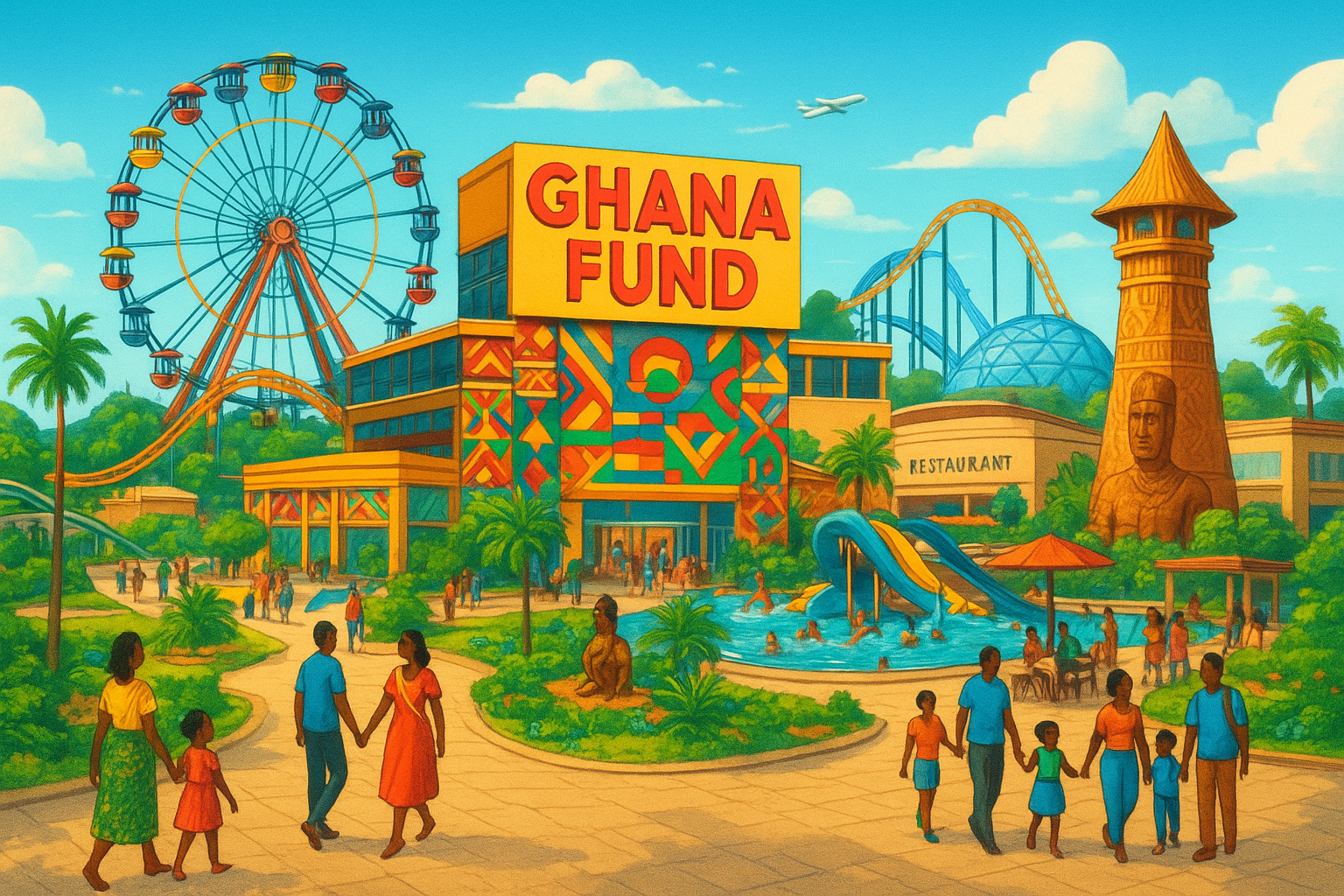
Ghana Fund is set to build Africa’s premier, world-class amusement centre, combining thrilling rides, water parks, VR and esports arenas, cultural story-telling zones, integrated hotels, shopping, and dining districts. This project will transform Ghana into Africa’s entertainment capital, attracting millions of domestic and international visitors every year. By blending cutting-edge technology with uniquely Ghanaian and African experiences, the centre will offer something truly distinctive on the global stage.
The amusement centre will create tens of thousands of jobs, from hospitality and operations to technology, arts, and management, while training a highly skilled workforce. It will significantly boost tourism revenue, generate foreign investment, and increase Ghana’s visibility as a safe, modern, and innovative destination. Beyond economics, the centre will promote Ghanaian culture internationally through immersive attractions, festivals, and events, strengthening soft power and national pride.
Integrated with Ghana’s expanding transport network - including air, rail, and road - the centre becomes a regional hub for West African tourism. With diverse revenue streams from ticketing, hotels, retail, events, and licensing, it’s a sustainable economic engine and a symbol of Ghana’s ambition and global leadership in entertainment.
Film, Music and Dance
Ghana Fund envisions making Ghana a global hub for film, music, and dance by investing in talent, state-of-the-art studios, and creative clusters. We will train artists, support local productions, and promote Ghanaian culture worldwide through festivals, streaming platforms, and international collaborations. This will boost jobs, attract foreign investment, and elevate Ghana’s cultural influence globally, positioning the country as Africa’s centre for creativity and innovation.
Manufacturing and Related Services
Ghana Fund envisions rapidly transforming Ghana into a self-reliant, industrialized economy by establishing strategic manufacturing hubs that create jobs, boost production, and position Ghana as a regional export leader. In the short term, it focuses on high-value sectors like food processing, textiles, automotive, machinery, and pharmaceuticals, linking local raw materials with modern manufacturing and efficient logistics.
To achieve this, we need targeted investment for factories and technology, reliable infrastructure, skilled labour through fast-track training programs, and strong policy support including tax incentives and export facilitation. The Fund also aims to build an ecosystem of services – research, logistics, maintenance and quality certification - to support sustainable growth.
Key to this vision are the Ghana Transit Trade Centre (GTTC) and the Africa Overseas Commercial Exchange (AOCE). The GTTC will act as a central logistics and trade hub, enabling manufacturers to efficiently import raw materials, export finished products, and reduce supply chain bottlenecks. It will leverage rail, road, and air networks to ensure speed and reliability in production and trade.
Meanwhile, the AOCE will provide global market access and industrial know-how, connecting Ghanaian manufacturers with international buyers and investors, promoting best practices, quality standards, and facilitating technology and knowledge transfer. Together, the GTTC and AOCE will ensure that Ghanaian manufacturing is efficient, competitive, and globally integrated, driving rapid industrialisation and positioning Ghana as a leader in African manufacturing.
With these measures, Ghana Fund will reduce import dependency, strengthen local industries, generate revenue, and create meaningful jobs, laying a strong foundation for Ghana’s rapid industrialization and regional competitiveness.
Industrial Cities and Estates
Ghana Fund will establish five principal industrial cities, each dedicated to a key sector: multi-product, food processing, aerospace, ship-building, railway and heavy machinery, and automotive industries. Complementing these will be industrial estates for smaller-scale industries like garments, footwear, gift items, timepieces, and packaging materials. Each industry will be selected through strict analysis to ensure market leadership and competitiveness. Factories will initially be set up by Ghana Fund and divested within six months, allowing rapid private-sector involvement. This strategy is designed so that each industrial city and estate reaches full production capacity within three (3) years, driving industrial growth, employment, and significant economic impact.
Special Supplementary Projects
Deep-Sea Marine Resort
Mobile Cellular Service
Radio and Television Broadcasts
Industrial Extension Training
Our vision is simple but bold: to equip every trainee with the practical skills, innovation mindset, and technical expertise required to drive Ghana’s industrialisation forward. From manufacturing and engineering, to logistics, energy, and digital industries, every program is hands-on, industry-aligned, and outcome-focused. Trainees will learn not just theory, but how to solve real-world problems, operate advanced machinery, and ensure quality and efficiency across the entire value chain.
Through strategic partnerships with global and local industries, internships in our industrial cities, and mentorship by seasoned professionals, we will create a workforce that is globally competitive, yet grounded in Ghana’s unique industrial needs. Every graduate will leave certified, capable, and ready to contribute immediately to productivity, innovation, and growth.
The Institute will also serve as a centre for continuous learning and adaptation, ensuring our trainers are world-class, our facilities are modern, and our programs evolve with emerging technologies. By building this pipeline of talent, we reduce reliance on foreign expertise, accelerate industrial expansion, and create high-quality jobs for our people.
In short, the Industrial Extension Training Institute is more than a school - it is a cornerstone of Ghana’s industrial revolution, a place where knowledge meets practice, skills meet opportunity, and ambition meets impact. With this initiative, the Ghana Fund ensures that industrialisation is not just a plan, but a reality for Ghana and for every Ghanaian who dreams to build and grow.
Intra-Africa Connections
Sovereign Wealth Support
By accumulating and storing gold within their own borders, governments can build real sovereign reserves that appreciate over time. These reserves become the foundation for strong sovereign wealth funds, enabling countries to finance infrastructure, industrial development, energy systems, agriculture, and logistics without relying heavily on foreign loans. Gold-backed reserves strengthen the national balance sheet, improve creditworthiness, and stabilise the currency, reducing inflation and strengthening investor confidence.
The gold depository system also promotes transparency, reduces smuggling, and supports formalisation of artisanal and small-scale mining, increasing government revenue. Stored gold can then be used as collateral for low-cost financing and development partnerships, giving African countries stronger negotiating power in global markets.
In collaboration with Ghana Fund, African governments gain the ability to create, protect, and grow sovereign assets, build resilient economies, and secure long-term national wealth for future generations - establishing a stronger, more independent African financial foundation.
Industrial Growth
Ghana Fund aims to accelerate Africa’s economic transformation by partnering with governments to build the infrastructure, industries, and financial systems needed for long-term progress. Through joint national investment platforms - similar to sovereign wealth funds - Ghana Fund will help countries mobilise capital without heavy borrowing, enabling large-scale development in rail, roads, energy, housing, agriculture, and industrial parks.
A key focus is creating integrated continental connectivity: regional rail networks, logistics hubs, dry ports, and digital trade systems that reduce transport costs and boost intra-African commerce under AfCFTA.
Ghana Fund will also support shared industrialisation, including manufacturing facilities, mineral processing plants, agro-processing zones, and machinery assembly hubs, allowing countries to add value locally and create millions of skilled jobs.
In agriculture, the Fund will help nations expand mechanised farming, irrigation, and national food depots, strengthening food security and stabilising prices.
Additionally, Ghana Fund will invest in renewable energy, technology transfer, and large-scale skills development to build a modern, competitive African workforce.
Overall, this partnership model enables African countries to accelerate GDP growth, increase exports, expand employment opportunities, and build resilient economies driven by African capacity and innovation.
What this means for African countries.
Through collaboration with Ghana Fund, African nations gain:
- Rapid infrastructure development
- Industrialization and manufacturing capacity
- Higher GDP and government revenue
- Millions of new jobs
- Increased exports and stronger currency stability
- Massive improvements in food security
- Accelerated technological progress
- Reduced poverty and greater national wealth
International Engagements
The GTTC will make Ghana the logistical hub of West Africa—streamlining customs, warehousing, and distribution to move goods faster, cheaper, and more efficiently. No longer will African products get lost in transit; Ghana will become the gateway for African trade.
The AOCE will open direct channels to global markets, showcasing African products on fair, competitive terms. By standardizing quality, pricing, and certifications, we ensure African goods can compete with the best in the world—from cocoa to manufactured products.
But this is about more than trade. It’s about industrialisation, value addition, and job creation. By connecting producers directly to buyers, we incentivize local manufacturing, reduce raw material exports, and keep wealth within Africa.
Finally, these hubs will strengthen regional integration and Africa’s negotiating power, creating a united front that can set the rules in global commerce, not just follow them.
In short, through GTTC and AOCE, Ghana Fund is not just facilitating trade – it is redefining Africa’s place in the global economy, turning potential into power, and ensuring our products and people compete fairly and win globally.
External links
Impressions!